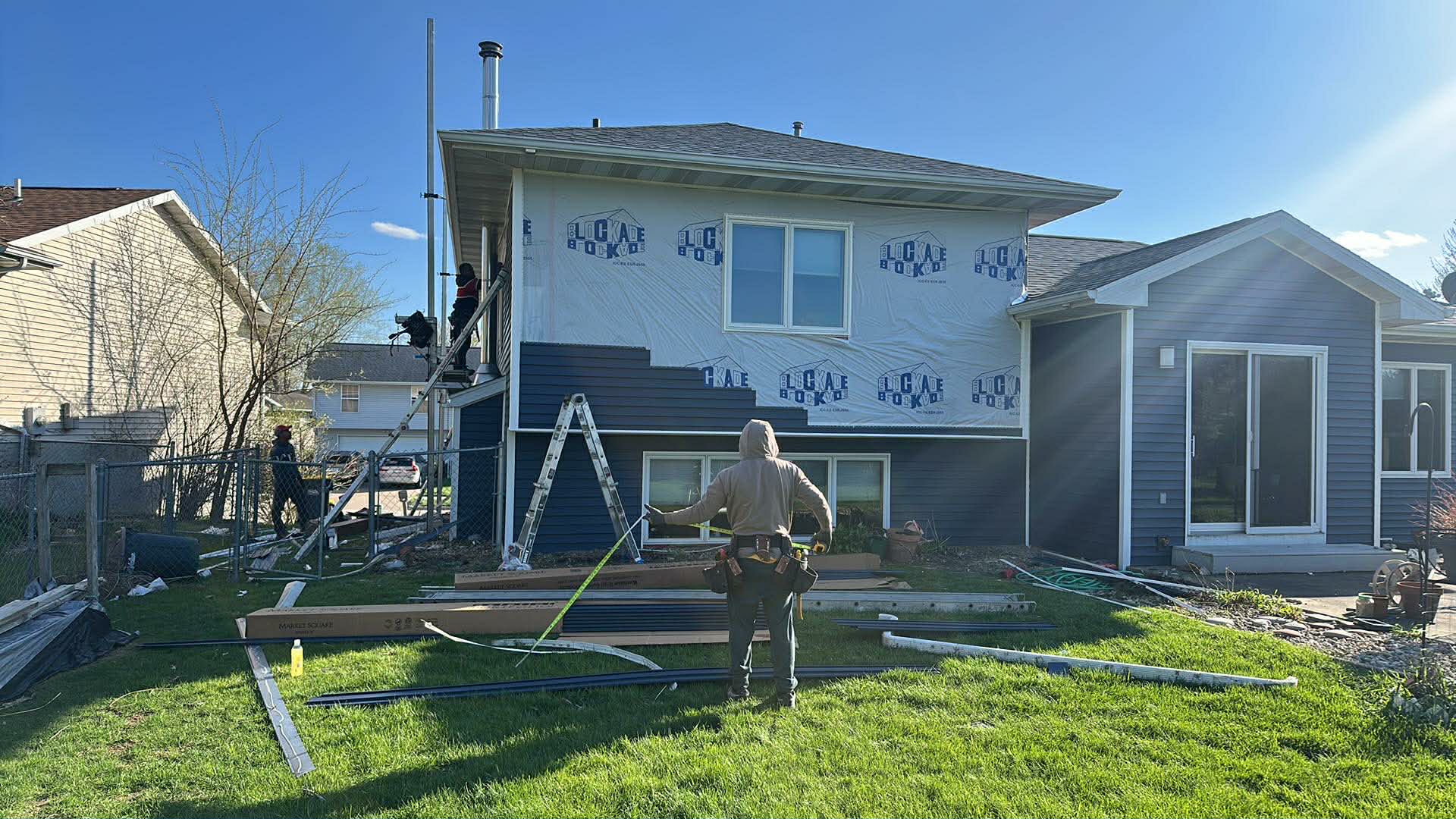
Cracked panels, fading color, or warped boards are signs your home’s siding needs attention soon. If panels are loose after wind, moisture is getting behind the surface, or seams are pulling apart, it is time to have the siding checked before the damage spreads.
Reimers Roofing And Restoration LLC helps Iowa homeowners with siding services across a range of materials in the form of repairs, replacements, and storm damage restoration. From vinyl to steel, Hardie board, and LP, we look at the siding as a whole, explain what we see, and help you decide the next step with clear, practical guidance.
Siding of any material often shows warning signs before a major problem appears. Catching those signals early can save sheathing, insulation, and framing from additional damage. A wall may still look acceptable from the street while hidden wear is already advancing at the seams, corners, or trim points.
If you notice any of the following, a closer look is worthwhile:
Reimers Roofing And Restoration LLC can inspect the surface, identify the source of the trouble, and recommend repair or replacement based on the siding’s condition, not guesswork.
Siding work is more than fastening new panels to a wall. It starts with evaluating the existing system, including the condition of the vinyl, steel, Hardie board, or LP siding, along with the house wrap, trim, and wall transitions. That full-picture approach helps prevent repairs that only solve part of the problem.
When damage is limited to a section of the wall, repair work may be the right move. We replace damaged vinyl panels, steel sections, Hardie boards, or LP pieces, address exposed areas, and pay attention to the parts where moisture can enter most easily, such as corners, seams, and penetrations.
When wear is widespread or repeated repairs no longer make sense, siding replacement becomes the practical choice. We remove the old siding materials, assess what is underneath, and install a new vinyl, steel, Hardie board, or LP system that is ready for Iowa weather and daily use.
Storm and wind damage can leave siding looking uneven or patchy even when leaks have not yet started. We handle siding restoration after damage, across vinyl, steel, Hardie board, and LP systems, so the exterior can be brought back to a sound condition without leaving vulnerable spots behind.
A solid siding system depends on more than the visible outer layer. Each part supports the others, and small failures can create bigger ones if they are ignored.
Sound sheathing: The wall structure underneath should be checked for weak or damaged areas before new siding goes on.
Reliable house wrap: This layer adds protection beneath the siding and helps limit moisture entry at vulnerable points.
Clean trim details: Corners, windows, and doors need careful attention where siding meets other surfaces.
Secure fastening: Proper panel attachment helps keep wind from pulling siding loose.
Consistent panel layout: Proper placement supports drainage and creates a finished exterior that looks intentional and performs well, regardless of material.
Those details matter whether the project is a small repair or a full siding replacement. We look at each one so the result is built for more than curb appeal.
Some siding can still be repaired. Others have reached the point where patching one area after another only delays the inevitable. If you are weighing your options, these are common signs replacement may make more sense:
We do not push a replacement when a repair is enough. At the same time, we do not recommend another patch when the siding is already telling a different story. The goal is to give Baxter homeowners a siding choice that matches the condition of the structure.
Deciding between repair and replacement can be easier when the symptoms are broken down one by one.
One area is affected: A limited patch of damage may call for panel replacement and localized sealing.
Several areas show wear: When damage is spread across the home, a larger solution often makes more sense.
The moisture keeps returning: Recurring trouble usually points to a deeper siding issue, not just a surface problem.
The exterior looks uneven: A patchwork appearance can mean the system has been repaired many times already.
Storm damage is visible: After wind or hail, a full inspection helps determine whether the siding can still serve the home well.
Reimers Roofing And Restoration LLC helps you sort through those details without pressure. We explain what the siding needs and what can wait.
Storms can leave siding of any material with damage that is easy to miss from the ground. Even if the exterior still looks fine for the moment, loosened panels, bruised vinyl, dented steel, or cracked Hardie board can create trouble later.
During a storm damage evaluation, we look for:
If repairs are needed, we focus on restoring the siding’s protective layers and addressing the areas most likely to allow moisture intrusion. If broader replacement is the smarter path, we explain why before any work moves ahead.
Homeowners often want to know what happens during a siding visit. Our process is straightforward and centered on the siding’s actual condition.
That approach keeps the process practical and easy to follow. You know what was found, what it means, and what comes next.
Basic siding awareness helps homeowners spot trouble before it grows. You do not need a ladder or to inspect every detail to stay informed. A few simple habits can go a long way.
These small checks can help you catch changes early and make a repair easier to manage.
How do I know if my siding needs attention?
Look for cracking vinyl, rusting or dented steel, chipping Hardie board, swelling LP, gaps between panels, or any water stains inside the home. Even one of those signs can point to a siding issue worth reviewing.
Can a small leak be linked to the siding material?
Yes. Moisture intrusion may start at a damaged panel, but it can also come from trim, corners, or seams nearby. The visible stain inside is not always the exact entry point.
What if only part of the exterior looks worn?
Localized wear may allow for repair. We check whether the rest of the siding is still sound enough to support that choice before recommending next steps.
Does siding need replacement all at once?
Not always. It depends on the siding’s overall condition, the spread of damage, and how well the remaining sections can still serve the home.
Can storm damage show up later?
Yes. Some siding damage is subtle at first and becomes more obvious after time passes. A careful inspection helps reveal issues that are not easy to spot from the ground.
Yes. Reimers Roofing And Restoration LLC serves Baxter, IA and nearby communities such as Newton, Colfax, Collins, Mingo, Kellogg, Monroe, Prairie City, Marshalltown, Mitchellville, Altoona, and Bondurant.
If your siding is showing signs of wear, do not wait for a small concern to become a larger repair. Reimers Roofing And Restoration LLC provides siding help for Baxter, IA homeowners who want clear answers and work that fits the siding’s actual condition, whatever the material.
Call +15157837783 or email reimers.roofing@gmail.com to discuss your siding and schedule a visit. We are located at 203 S High St, Baxter, IA 50028 and available Monday through Friday, 8:00 AM to 6:00 PM.
Get in Touch
Share what is happening with your roof or exterior, and we will help you figure out the next best step for repairs, replacement, or restoration.